22 June 2026
The Thermal Envelope: Using Natural Ventilation and Artisanal Plasters to Cool Interior Spaces
In an era where high-end design is often equated with high energy…

12 June 2026
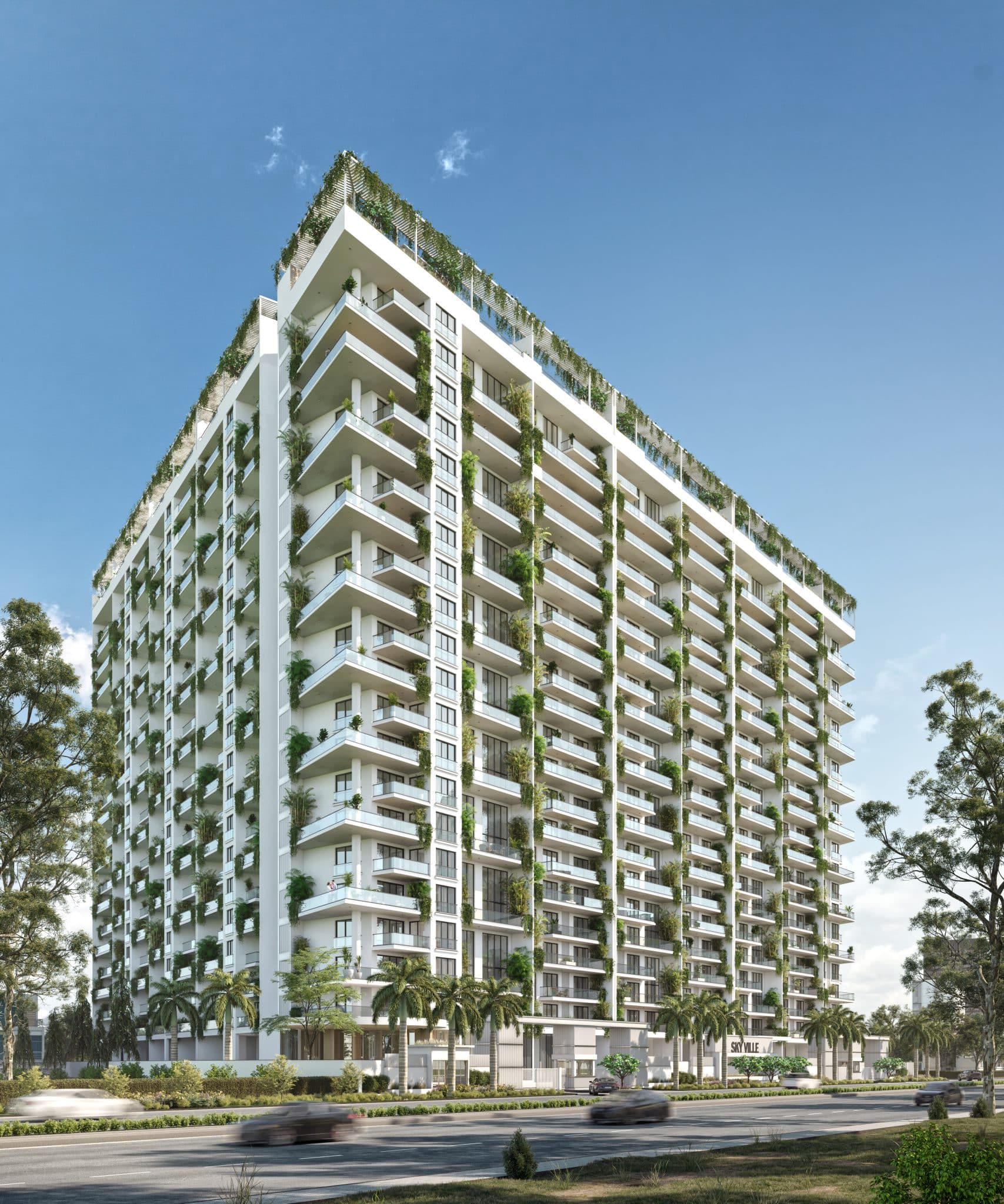
Sustainability in high-density developments is often misunderstood as a secondary layer of technology, yet for Bobby Mukherrji Architects, it is the foundational logic of the structure. For a landmark of this magnitude in Ahmedabad, the challenge was to mitigate intense regional heat while maintaining the transparency expected of luxury architecture. The design of Skyville proves that a 1.1 million square foot project can act as a climate-responsive landmark by prioritizing passive cooling over mechanical reliance, a true testament to architectural excellence.
A primary achievement in this project’s sustainable design is the use of the facade as a thermal buffer. Deep-set decks and cantilevered volumes create natural overhangs that shield internal living spaces from direct solar gain. This structural strategy ensures that the exclusive homes remain cool during peak daylight hours, significantly reducing the energy required for air conditioning. This intersection of form and function is a staple of high-end design, where the building’s aesthetic is derived directly from its environmental performance.
Beyond shading, the tower is engineered to harness the city’s prevailing winds. By adopting the Sky Villa typology, the floor plates are designed with multiple exposures, allowing for genuine cross-ventilation rarely found in standard high-rises. These breathable corridors and open-air garden pockets ensure a constant flow of fresh air, improving indoor air quality for residents. This focus on climatic adaptability demonstrates how the best interior design firm in India can utilize regional patterns to enhance comfort without increasing the building’s carbon footprint.
The vertical forest concept at Skyville serves a dual purpose: aesthetic softening and micro-climate management. Vast layers of greenery integrated into the balconies act as natural filters for dust and noise, while providing evaporative cooling to the surrounding air. This commitment to biophilic high-rises transforms the tower into a carbon-sink, helping to counteract the urban heat island effect. As a top design studio in Mumbai, the firm believes that successful residential landmarks must contribute back to their environment, utilizing premium design to create a more resilient urban future.
The sustainability of this project is tied to its lifecycle. By selecting materials with high thermal mass and enduring quality, the architecture minimizes the need for frequent maintenance. From water recycling systems that sustain the landscaped gardens to precision-engineered glazing that optimizes natural light, every detail reflects an award winning design philosophy backed by rigorous science. This project stands as a reminder that bespoke architecture must be synonymous with environmental stewardship, ensuring that the luxury interior design of today does not compromise the resources of tomorrow.
 Sustainable Design
22 June 2026
In an era where high-end design is often equated with high energy…
 Sustainable Design
18 June 2026
Landscape design holds a strong influence in luxury hospitality. It sets the…
 Sustainable Design
14 June 2026
In the realm of high end interior designing, sustainability is often misunderstood…
 Sustainable Design
11 June 2026
In the modern urban landscape, a park must be as technically efficient…
 Sustainable Design
08 June 2026
In the context of luxury architecture, sustainability is often most effective when…