30 June 2026
The Engineering of Vertical Density and Private Luxury in Multi-Level Single-Family Homes
The architectural evolution of dense urban environments requires a sophisticated response to…

10 June 2026
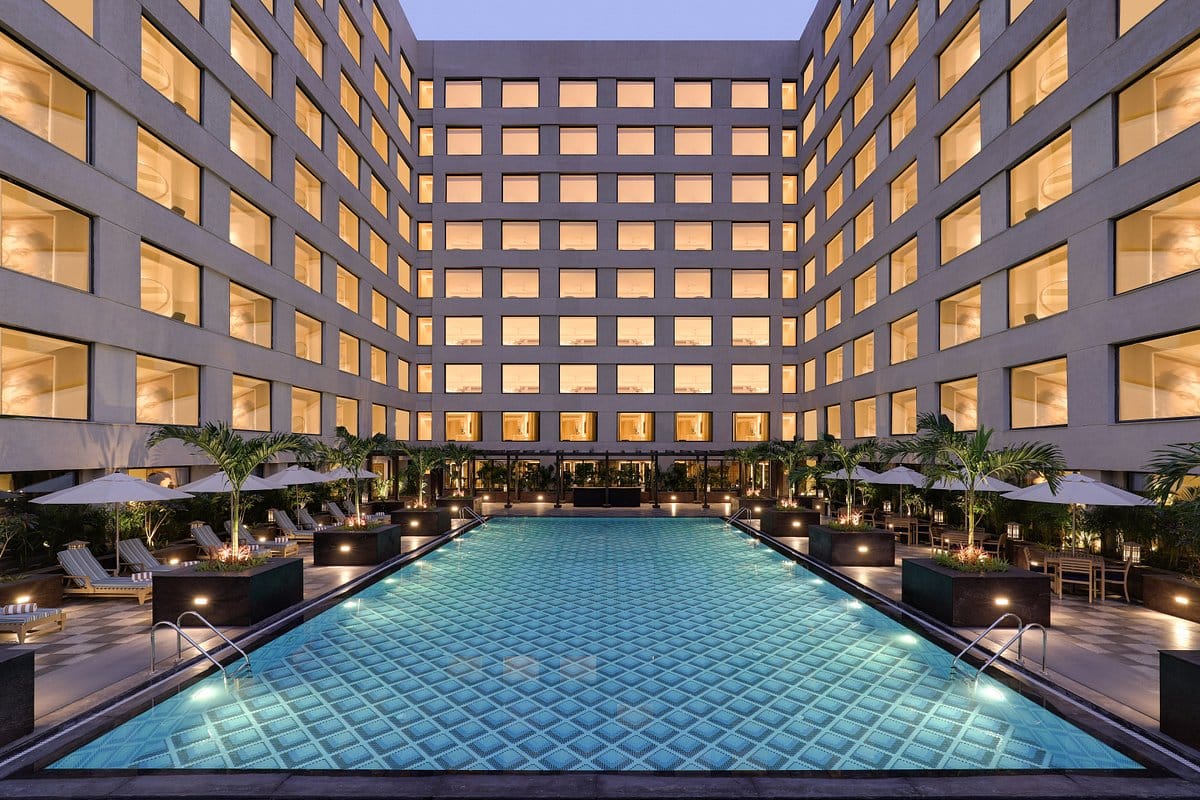
Designing the interior framework for a high-density transit hub involves solving a complex puzzle: how to ground a massive volume of guests while making tight, structured spaces feel open, breezy, and effortlessly premium. For the interiors of Aurika, Mumbai International Airport, the objective was clear. The property carries an immense footprint of 669 keys on a tightly configured airport plot, meaning the interior architecture had to actively manipulate perception to create an atmosphere of expansive freedom. Bobby Mukherrji Architects unlocked this potential through strategic spatial planning, proving that clever layout manipulation is the true foundation of high-end hospitality design.
To counteract structural boundaries and compressed volumes, the design team utilized clever visual techniques that make physical borders seem to disappear. In major transition zones, mirror-clad columns were introduced to reflect light and visually duplicate the surrounding space, instantly breaking up the rigidity of the heavy support pillars. By positioning a soaring, double-height entrance pocket immediately adjacent to a single-height reception zone, the layout creates a sudden release of vertical space. This calculated contrast makes the arrival experience feel monumentally grand, establishing a standard expected from the best interior design firm in India.
Rather than adhering to rigid, block-like divisions that amplify a feeling of enclosure, the studio introduced fluid, angled layout geometries. Furniture islands, custom credenzas, and flooring patterns are oriented to guide the eye diagonally across the public lounges, effectively lengthening the visual field. This strategic positioning allows individual zones like the Mirasa dining room and Ariva bar to feel distinct and secluded without requiring heavy, light-blocking partition walls. This meticulous discipline shows the precise spatial planning required of a premier hotel interior designer.
Managing India’s largest room inventory requires an understanding of human psychology at scale. To prevent guests from feeling lost within the massive footprint, the public zones are broken down into a series of smaller, emotionally comforting pockets. Sunken seating areas, low-slung tailored lounges, and custom-woven area rugs act as invisible boundaries, creating private sanctuaries within a highly populated environment. This masterful balancing act ensures that the property can host grand gatherings in the Ekaara Ballroom while maintaining a sense of quiet sanctuary elsewhere, a signature of understated elegance.
The completed interior scope of Aurika Mumbai redefines how high-density commercial properties are experienced from the inside out. By prioritizing structural transparency, smart light multiplication, and fluid circulation paths, the studio successfully transformed a high-volume airport property into a calm coastal sanctuary. The project stands as a testament to what a top design studio in Mumbai can achieve when technical precision meets a deeply humanized design approach, solidifying its place as an award winning design that reinterprets the boundaries of modern luxury interior design.
 Architecture & Interiors Portfolio
30 June 2026
The architectural evolution of dense urban environments requires a sophisticated response to…
 Architecture & Interiors Portfolio
29 June 2026
In the dense urban fabric of Mumbai, the most successful residential projects…
 Architecture & Interiors Portfolio
28 June 2026
Modern premium developments demand shared amenities that evolve alongside the daily routines…
 Architecture & Interiors Portfolio
26 June 2026
Designing premium commercial entertainment spaces requires a deep understanding of human movement…
 Architecture & Interiors Portfolio
25 June 2026
The true measure of high-end estate planning is not found in outward…
 Architecture & Interiors Portfolio
24 June 2026
In the heart of one of Delhi’s most historic and high-energy commercial…