30 June 2026
The Engineering of Vertical Density and Private Luxury in Multi-Level Single-Family Homes
The architectural evolution of dense urban environments requires a sophisticated response to…

16 June 2026
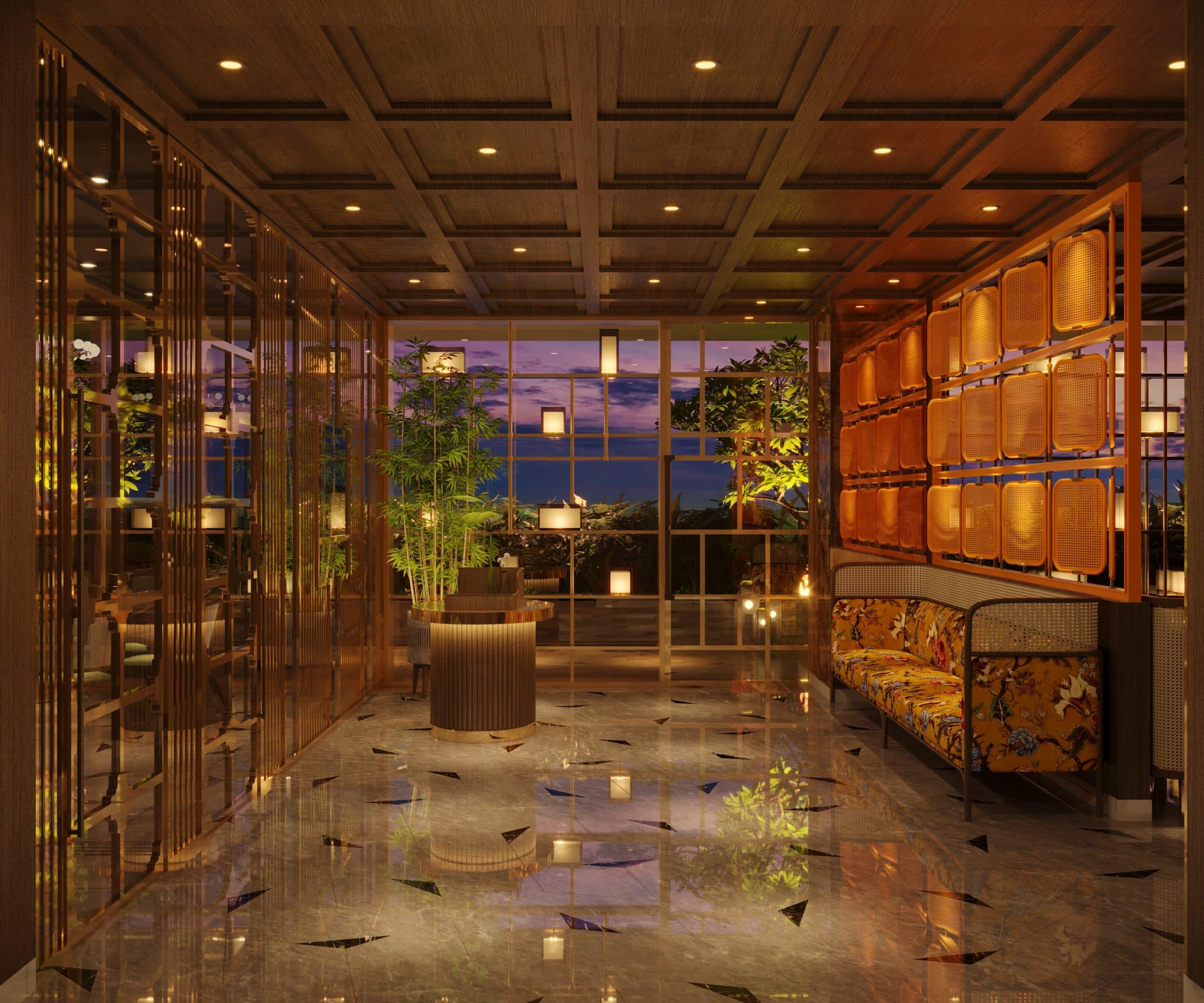
The operational and social success of a high-end restaurant depends entirely on the invisible engineering of its floor plan. When mapping out a luxury hospitality destination within a landmark property like Taj Amer, the design team must solve a complex dual equation: providing absolute spatial intimacy for high-profile patrons while maintaining completely unobstructed paths for fast-moving service. At House of Ming, Bobby Mukherrji Architects rejected the conventional, wide-open dining hall blueprint in favor of a highly calculated, non-linear floor layout. By utilizing advanced structural zoning and semi-porous partitions, the studio established a sophisticated circulation hierarchy. The resulting plan balances guest discretion with functional efficiency, showing how a top design studio in India can transform a commercial footprint into a deeply comfortable, high-performance environment.
The journey through the restaurant is designed as a gradual sequence of decompression, systematically slowing down the guest’s pace from the moment they cross the threshold. Arriving patrons are not immediately exposed to the main dining crowd; instead, they are guided through a curved, low-lit entry vestibule that acts as a mental palette cleanser. This intentional pathing breaks up direct external drafts and noise, immediately wrapping visitors in a quiet, collected atmosphere. Managing this subtle introductory transition requires the advanced layout intelligence of a leading Mumbai design studio that values the psychological impact of spatial sequences just as much as physical aesthetics.
The interior relies on a network of freestanding, hand-sculpted timber screens to segment the floor plan. These architectural filters divide the space into a series of interconnected, private dining nooks, offering guests the luxury of exclusive enclosure. Because the intricate woodwork is semi-permeable, it catches drifting light and allows a soft, controlled sense of the surrounding energy to pass through without violating personal privacy. This mastery of transparent boundaries elevates the project within the realm of international design studio benchmarks, demonstrating how to maintain structural continuity across an entire floor plate.
To keep the fine dining experience completely relaxed and peaceful, the mechanics of hospitality service must be kept entirely out of the guest’s direct line of sight. The layout addresses this by pushing the primary service paths to the outer perimeters of the seating clusters, ensuring that staff can navigate between tables, the active show kitchens, and support stations without interrupting private conversations. The wide clearance zones around the central furniture groups completely eliminate common restaurant bottlenecks and tight corners. This smart integration of commercial logistics with luxury forms reinforces the firm’s status as a premier international luxury design studio, proving that elite hospitality design is rooted in flawless operational flow.
The floor plan uses subtle, tactile material intersections to intuitively guide movement through the space without relying on disruptive physical signage. The transition from active thoroughfares to static dining zones is signaled by precise shifts in floor textures and density, changing smoothly from dark polished stone to deep, sound-absorbing custom carpets under the tables. This tactile zoning works in harmony with the overhead ceiling heights, which drop lower over the private tables to create an immediate sense of shelter. This holistic coordination of vertical volumes and floor treatments shows the rigorous execution of a premier Mumbai’s award winning design firm, establishing an environment where architecture, movement, and human comfort function as a single, beautifully synchronized system.
 Architecture & Interiors Portfolio
30 June 2026
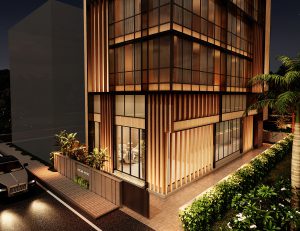
The architectural evolution of dense urban environments requires a sophisticated response to…
 Architecture & Interiors Portfolio
29 June 2026
In the dense urban fabric of Mumbai, the most successful residential projects…
 Architecture & Interiors Portfolio
28 June 2026
Modern premium developments demand shared amenities that evolve alongside the daily routines…
 Architecture & Interiors Portfolio
26 June 2026
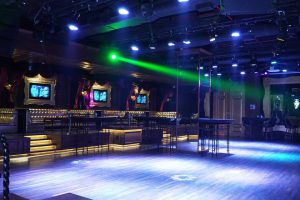
Designing premium commercial entertainment spaces requires a deep understanding of human movement…
 Architecture & Interiors Portfolio
25 June 2026
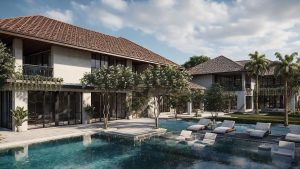
The true measure of high-end estate planning is not found in outward…
 Architecture & Interiors Portfolio
24 June 2026
In the heart of one of Delhi’s most historic and high-energy commercial…