30 June 2026
Adaptive Workspaces: Balancing High-Performance Utility with Executive Comfort
The interior strategy for Parsvnath 27 moves away from the typical noise…

24 June 2026
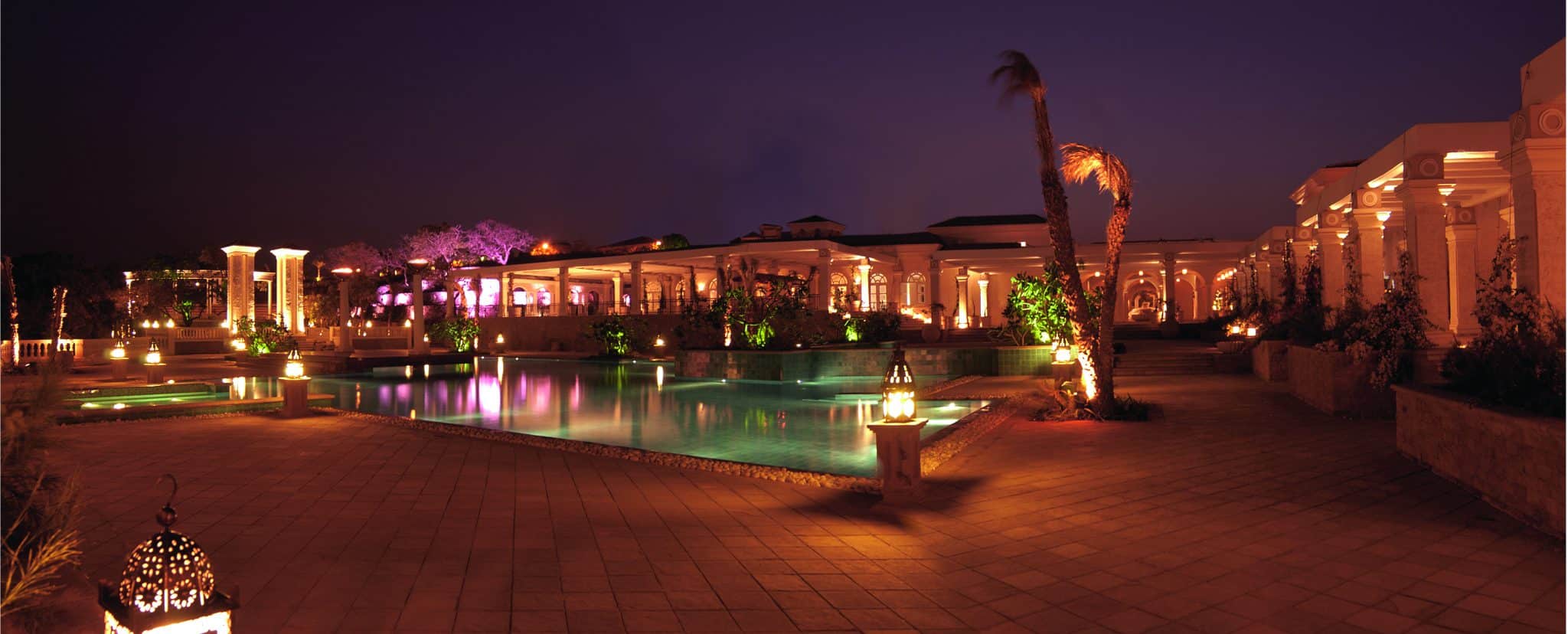
The true test of an elite interior layout is how gracefully it transitions across a twenty-four-hour cycle. While daytime design relies heavily on natural light to reveal textures and scale, evening design requires a complete shift in strategy, using shadows, contrast, and carefully directed light to alter human behavior. When creating the night-time identity for Club Exotica, Bobby Mukherrji Architects completely moved away from bright, uniform overhead illumination. Instead, the design uses hidden light sources to create a moody, relaxing atmosphere. This low-contrast lighting style highlights the building’s curves, turning a shared neighborhood space into a peaceful retreat that helps residents unwind after a long day in the city.
As natural sunlight fades, the interior lighting is engineered to emphasize the physical depth of the walls rather than just throwing light into empty space. Low-voltage, dimmable LED channels are hidden within the baseboards and ceiling borders, casting a soft upward wash that grazes the raw plaster. This precise placement highlights the natural imperfections of the hand-applied surfaces, creating beautiful patterns of light and dark. Mastering this level of textured illumination requires the skilled hand of an award winning design firm that treats light as a building material rather than a basic utility. By keeping the fixtures hidden, the walls glow softly on their own, making the boundaries of the room feel calm and warm.
The characteristic Spanish hacienda archways that structure the interior floor plan are treated as large sculptures under the evening lights. Hidden spotlighting spotlights the inside curves of each archway, adding dramatic depth and creating clear paths through the lounges. This precise focus on lighting layout reflects the design values of an international luxury design studio that values the power of shadow. Rather than flooding the walkways with bright light, the layout keeps the corridors low-lit, encouraging residents to slow their physical pace as they move between the active dining zones and quiet lounges.
The relationship between the indoor lounges and the central pool deck becomes magical once the sun sets. The soft underwater lights from the pool cast dancing reflections onto the glass walls and smooth ceilings of the adjacent indoor dining areas. This smart integration of natural elements into the indoor environment shows the spatial intelligence of a premier interior design studio. The movement of the water creates a calming, ever-changing pattern across the indoor surfaces, eliminating the need for loud, distracting artwork. It grounds the space in its coastal setting, providing a relaxing visual anchor for guests enjoying a late-night drink.
In high-contact spaces like the bars, private dining booths, and conversation corners, the lighting drops lower to create private bubbles for guests. Low-glare, warm-toned hanging fixtures are positioned close to table surfaces, focusing attention entirely on food, drink, and conversation. This careful control over light levels reflects the strict execution of modern luxury hospitality design. The ambient shadows around each seating group offer a sense of privacy within a shared room, allowing residents to talk freely without feeling exposed. By blocking out the bright noise of the outside world, the layout turns the evening into an exclusive, highly comfortable retreat.
While the primary goal of the lighting plan is to create a moody, relaxing sanctuary, it must still ensure absolute safety and clear movement for residents and staff. The transition points, steps, and floor level changes are subtly marked with low-level step lights that guide foot traffic safely without breaking the quiet mood. This clever combination of style and safety shows the execution of a premier practice specializing in premium hospitality interiors. Every fixture works toward a single goal: guiding the human nervous system into a restful state, proving that the most luxurious environments are those that understand how to use shadows to create ultimate peace.
 Design Narrative & Aesthetics
30 June 2026
The interior strategy for Parsvnath 27 moves away from the typical noise…
 Design Narrative & Aesthetics
30 June 2026
The modern penthouse represents the pinnacle of residential design, where boundaries between…
 Design Narrative & Aesthetics
29 June 2026
Designing the interior architecture for a property with India’s largest hotel inventory…
 Design Narrative & Aesthetics
29 June 2026
The early blueprint for modern integrated communities in the Mumbai metropolitan region…
 Design Narrative & Aesthetics
28 June 2026
When designing within an urban ecosystem known worldwide for rigid rationalist grids…
 Design Narrative & Aesthetics
28 June 2026
Contemporary luxury is increasingly defined by spatial autonomy—the luxury of space, privacy,…