30 June 2026
Adaptive Workspaces: Balancing High-Performance Utility with Executive Comfort
The interior strategy for Parsvnath 27 moves away from the typical noise…

13 June 2026
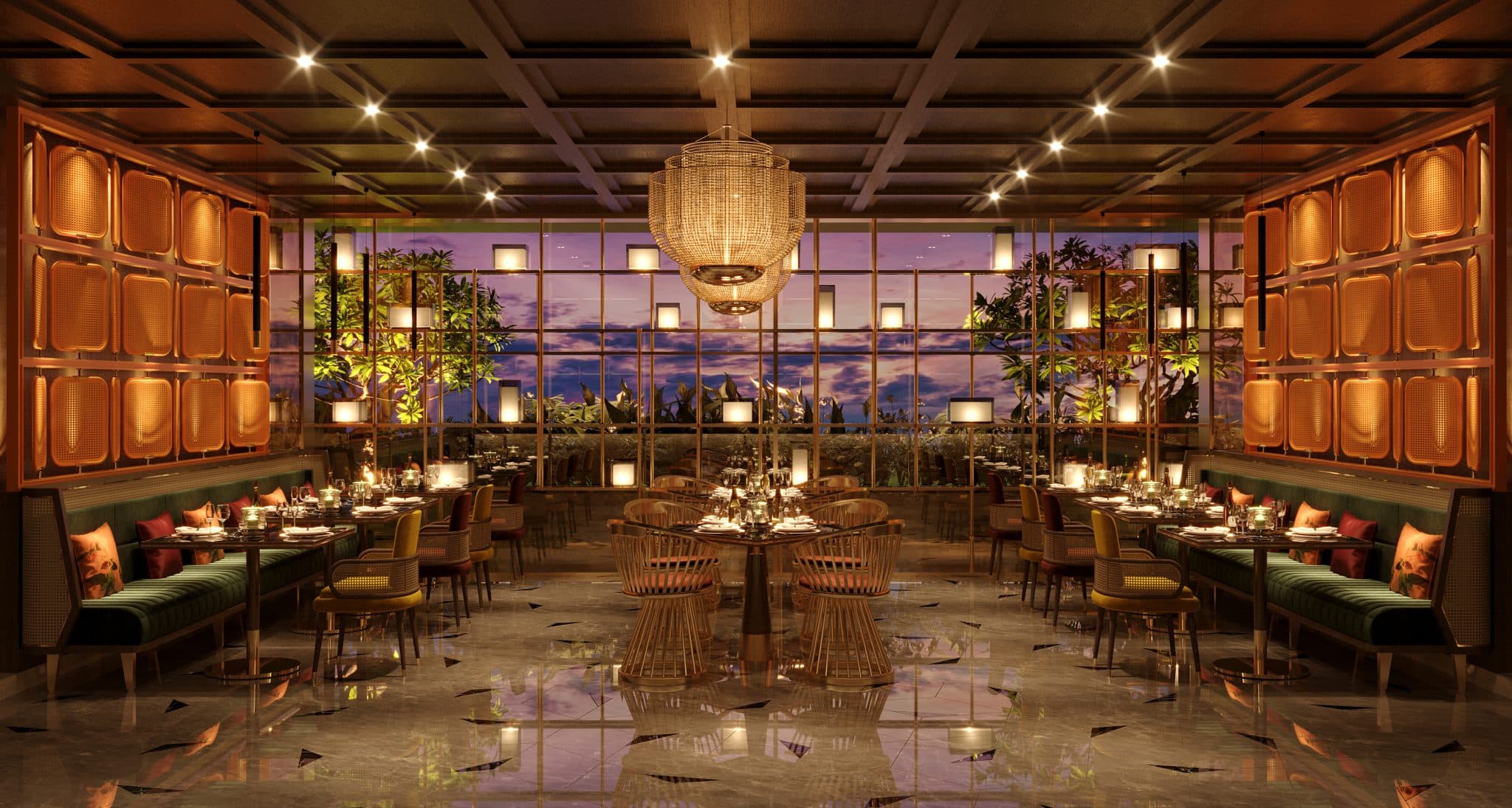
When crafting a signature dining space within an expansive, palace-style hotel envelope, the primary interior hurdle is managing the immense environmental energy. Grand heritage properties are traditionally defined by towering white arches, bright marble floors, and sweeping daylight that intentionally amplifies the monumental scale of the building. To step inside House of Ming at Taj Amer, however, is to experience a deliberate, highly calculated visual deceleration. Spearheaded by Bobby Mukherrji Architects, the interior layout flips the script on traditional hospitality forms by embracing the emotional weight of deep shadows, dark wood tones, and highly focused, low-contrast illumination. This moody, intimate approach functions as a premium spatial amenity, providing an instant sensory cooling effect that allows arriving dinner guests to leave the intense heat and glare of the surrounding Rajasthan landscape entirely at the door.
The foundational tone of the restaurant is established by its extensive, floor-to-ceiling timber framework, which deliberately rejects the open, exposed sightlines common in high-traffic hotels. Freestanding, hand-carved latticed screens act as semi-porous walls, dividing the floor plan into exclusive private dining pockets and cozy corners while allowing the distant hum of the restaurant to gently filter through. Navigating this type of drastic shift in atmospheric density requires the highly specialized eye of a leading design studio in Mumbai that understands how to use deep, saturated material values to cultivate quietude and permanence. By positioning the primary seating clusters away from active entryways, the design team gives high-profile guests total privacy without sacrificing operational efficiency.
Rather than splashing the dining zones with uniform brightness, the layout treats lighting like a theatrical performance where the fixtures themselves stay completely hidden from view. Warm, dimmable light channels are recessed directly into the custom millwork and timber panelling, casting a soft, downward wash that grazes the raw plaster and upholstery fabrics without creating harsh glares. This low-lux methodology ensures that the physical boundaries of the room gently recede into the background, focusing a guest’s attention entirely on their immediate table and companions. This mastery over hidden lighting layers defines the output of a premier top interior design studio in India can look to for cutting-edge hospitality spaces, where human comfort is consistently prioritized over loud, distracting fixtures.
A successful fine dining layout must quietly support the service team so that their operational movements appear completely seamless to the guests. The wider circulation pathways around the centralized seating blocks allow staff to navigate the floor effortlessly, preventing structural bottlenecks near the entry points or show kitchens. By using subtle floor finish transitions and custom acoustic treatments to absorb the ambient clatter of cutlery, the environment stays consistently grounded and serene. This operational clarity ensures that the restaurant functions beautifully under high-density demands, cementing the firm’s reputation as a top-tier global design practice that treats utility and artistry as a single, inseparable discipline.
To truly lock in a sense of calm, an elite interior layout must manage its soundscape just as rigorously as its visual themes. The hard, reflective surfaces typical of grand palace architecture are replaced here with dense, sound-absorbing materials, including plush custom carpeting, rich fabric wall paneling, and thick timber lattices that break up sound waves. This intensive acoustic sealing keeps table conversations remarkably private, preventing the sharp clatter of fine china and silverware from echoing across the room. This complete control over light, shadow, and sound showcases the capability of a leading Mumbai-based interior design studio, demonstrating how a disciplined design voice can completely transform a guest’s mental state through pure environmental contrast.
 Design Narrative & Aesthetics
30 June 2026
The interior strategy for Parsvnath 27 moves away from the typical noise…
 Design Narrative & Aesthetics
30 June 2026
The modern penthouse represents the pinnacle of residential design, where boundaries between…
 Design Narrative & Aesthetics
29 June 2026
Designing the interior architecture for a property with India’s largest hotel inventory…
 Design Narrative & Aesthetics
29 June 2026
The early blueprint for modern integrated communities in the Mumbai metropolitan region…
 Design Narrative & Aesthetics
28 June 2026
When designing within an urban ecosystem known worldwide for rigid rationalist grids…
 Design Narrative & Aesthetics
28 June 2026
Contemporary luxury is increasingly defined by spatial autonomy—the luxury of space, privacy,…