30 June 2026
Adaptive Workspaces: Balancing High-Performance Utility with Executive Comfort
The interior strategy for Parsvnath 27 moves away from the typical noise…

09 June 2026
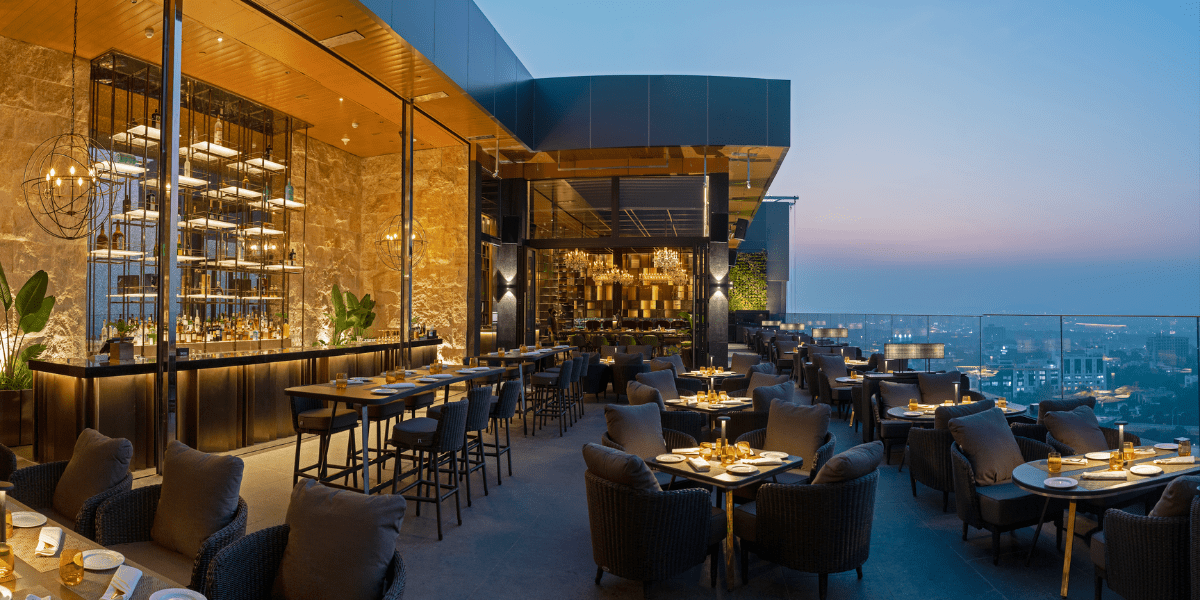
A successful rooftop project requires a cohesive balance between structural engineering and aesthetic refinement. For the Al Di La at Conrad Pune, Bobby Mukherrji Architects focused on the concept of understated elegance to create a space that feels both timeless and current. By treating the rooftop as a complex exercise in interior architecture, the firm moved beyond simple decoration to fundamentally change how the guest interacts with the environment. The result is a venue that demonstrates the impact of sophisticated design on the commercial success of a luxury hotel.
The transformation of the terrace into a premier social hub required a highly disciplined approach to high-end hospitality layouts. The focus remained on clean lines and a neutral palette to ensure that the interiors remained the primary focus. By integrating operable glass walls, the team achieved a level of modern design studio precision that allows the venue to transition seamlessly between an enclosed lounge and an open-air terrace. This flexibility is a core component of luxury interior design, where the ability to adapt to the environment is as vital as the visual appeal of the finishes.
The material selection for Al Di La was guided by a commitment to quality and longevity, standards consistently upheld by the best interior design firm in India. Spanish Bronze Armani marble and hand-chiseled Italian travertine were utilized to provide a sense of grounded luxury. This approach involves selecting materials that look premium while possessing the durability required for high-traffic environments. The use of custom-blown glass blocks adds a layer of translucency and depth, reflecting the technical expertise involved in an award winning design. By focusing on the raw beauty of natural stone and glass, a setting was created that maintains its character through constant use.
Effective space planning is the foundation of any successful hospitality project. At Al Di La, the layout guides guests through a series of distinct zones, from high-energy bar areas to secluded seating nooks. This level of sophisticated design ensures that the rooftop remains functional during peak hours without feeling crowded, a hallmark of the top design studio in Mumbai. The priority was to ensure that the circulation paths felt natural and intuitive. This strategic arrangement of furniture and structural elements reflects the expertise of a professional luxury hospitality designer, providing a comfortable experience for every guest regardless of the time of day.
The success of Al Di La is found in its ability to serve as a central social pillar. The combination of understated elegance and technical precision has created a venue that continues to attract an elite audience. By prioritizing quality materials and a functional layout, the project stands as a benchmark for luxury interior design in India. The lounge remains a testament to how a clear vision can be translated into a durable and iconic hospitality environment.
 Design Narrative & Aesthetics
30 June 2026
The interior strategy for Parsvnath 27 moves away from the typical noise…
 Design Narrative & Aesthetics
30 June 2026
The modern penthouse represents the pinnacle of residential design, where boundaries between…
 Design Narrative & Aesthetics
29 June 2026
Designing the interior architecture for a property with India’s largest hotel inventory…
 Design Narrative & Aesthetics
29 June 2026
The early blueprint for modern integrated communities in the Mumbai metropolitan region…
 Design Narrative & Aesthetics
28 June 2026
When designing within an urban ecosystem known worldwide for rigid rationalist grids…
 Design Narrative & Aesthetics
28 June 2026
Contemporary luxury is increasingly defined by spatial autonomy—the luxury of space, privacy,…